
by Elena Czarnowski
As a mom and educator, I spend a lot of time thinking about the skills kids truly need for adulthood. I’ve taught students for years in complex subjects like engineering and mathematics, and I always assumed I would naturally know how to teach my own children the important things too. But then came real life.
There I was one afternoon, a tired mother of three boys, standing in the self-checkout line while one of my sons pointed to the cheap candy and checkout treats. At first, I tried to say no. I knew it wasn’t necessary. I knew it was just impulse and marketing. But exhaustion has a way of softening even the strongest intentions. And at that moment, I caved. I let them grab whatever they wanted just so everyone would settle down and we could make it out of the store.

When I finally walked to the car, I felt strangely defeated. Not because of the candy, but because of what it represented. What was I doing? I understood money. I understood values. Yet in the rush of parenting and the pressure of everyday life, I realized I was letting the world teach my kids about spending, status, and “stuff” instead of teaching them myself.
My children were absorbing messages about money everywhere—but we weren’t really talking about it at home. I didn’t have a grand financial plan or a perfect system. I just had one question that changed everything: what would happen if money became a normal topic at our kitchen table, and I started the conversation?

It sounds almost too simple, doesn’t it? In a world filled with big challenges—rising costs, growing debt, financial stress, and constant economic uncertainty—it can feel like the solution must be complicated. But what I discovered is that one of the most powerful tools we have as parents is not a complex financial course or an advanced degree. It’s a conversation. A small, consistent, intentional conversation that happens week after week.

Why Kids Need to Learn About Money Earlier
Financial literacy is one of the most important life skills a child can learn, yet in the United States, it is still not taught widely or consistently. Many adults enter adulthood without understanding basic concepts like budgeting, saving, interest, investing, or credit. In fact, studies show that Americans score only around 50 percent on financial literacy assessments, meaning half of what we need to know about money is missing for the average person. Teenagers report that they want more financial education, but many say they don’t feel prepared to manage money in the real world.
This gap matters because money touches everything. It affects the choices we make, the opportunities we can access, the stress we carry, and the stability we build. When people lack financial knowledge, they are more likely to fall into cycles of high-interest debt, paycheck-to-paycheck living, and chronic financial anxiety. When people understand money, they gain freedom. They gain confidence. They gain options.

How Financial Literacy Shapes a Child’s Future
The return on investment for financial literacy is enormous, especially when it starts young. Kids who learn about money early are more likely to avoid unnecessary debt later. They are more likely to save, to invest, and to understand long-term planning. That translates into less financial stress as adults, healthier relationships, and stronger family stability. It also creates the building blocks of generational wealth—something that can change the trajectory of an entire family line.
And the ripple effects go beyond individual households. A financially educated generation strengthens the economy. It supports entrepreneurship and innovation because young adults with financial confidence are more willing to start businesses, take smart risks, and create new opportunities. It strengthens the middle class by increasing security, stability, and upward mobility. It narrows the wealth gap by giving more children the knowledge that has historically been available only to a privileged few.
Financial literacy also creates smarter civic engagement. Money and policy are deeply connected. When citizens understand how taxes, interest rates, inflation, debt, and public spending work, they become more informed voters. They advocate for fairer systems. They participate in shaping communities that support healthier families and stronger economic structures. In this way, teaching kids about money is not just personal—it is deeply societal.

It Starts With One Small Habit
All of this can feel overwhelming until you realize it doesn’t have to start with a full curriculum. That’s where my own story began.
I wasn’t trying to build a financial empire at my kitchen table. I was simply a mom wondering what would happen if I stopped avoiding money conversations and started making them normal. So I tried something small. I chose ten minutes a week, every Monday after school, and I talked to my sons about money.

The 10-Minute Money Talk
Sometimes we talked about saving. Sometimes we talked about needs versus wants. Sometimes we talked about how banks work, or why investing grows over time. Sometimes it was as simple as, “What would you do with twenty dollars if you wanted it to matter a year from now?”
What surprised me most was not how quickly they understood. It was how quickly their confidence changed.
Over time, their financial habits shifted. They began thinking before spending. They started asking deeper questions. They became more interested in how money works than in simply using money to buy things. They talked about goals. They talked about the future. They shared ideas. And most importantly, money stopped feeling like a mysterious adult topic and started feeling like something they could understand and manage. That is the power of ten minutes.
It wasn’t about perfection. It was about repetition. It was about creating a culture where money was not taboo, stressful, or avoided, but discussed openly with curiosity and confidence.
As I watched this transformation in my own children, I realized something important: if this could happen in my living room, it could happen anywhere.

Raising a Financially Confident Generation
That’s when I grew this idea into something bigger. Imagine what would happen if families across the United States committed to ten minutes of money talk each week for the next ten years. We would see less debt. Less stress. Higher savings. More investing. More stability. Stronger families. A stronger middle class. More entrepreneurship. Greater community growth. More informed voters. Fairer systems. And a generation equipped not just to survive financially, but to thrive.
You can do this at home too. Set aside ten minutes each week. Talk about what money means, why certain choices matter, and how goals and consequences connect. Make it normal. Let curiosity lead. Children learn best when they feel supported, when they are encouraged to ask questions, and when they see their own progress. Over time, those small conversations become confidence, and that confidence becomes competence.

Here is a list of topics I suggest starting with to get you going:
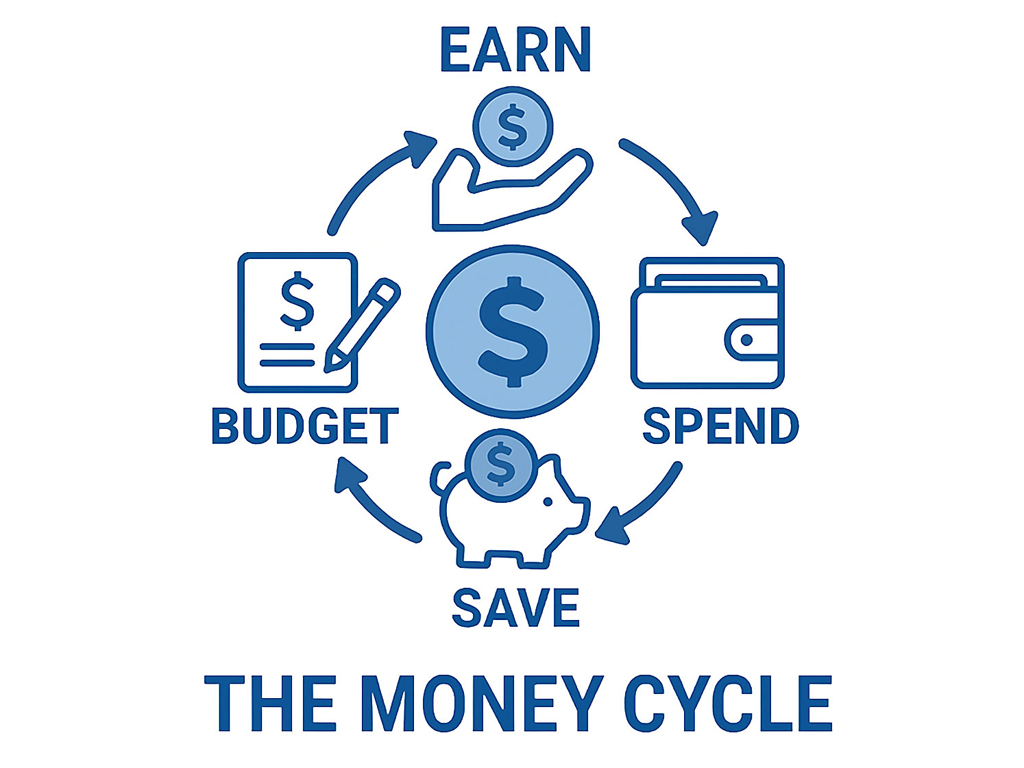
The Money Cycle (Earn → Save → Spend → Invest → Give)
Teaching kids how money flows and how every dollar has a purpose.
Saving and Budgeting for Goals
Helping kids plan, prioritize, and feel in control of their money choices.
Compound Interest and Investing Basics
Showing how money can grow over time through patience, ownership, and smart investing.
Debt, Credit, and Financial Traps
Understanding borrowing, interest rates, and how to avoid costly mistakes.
Values, Spending, and Building Long-Term Wealth
Connecting money to character, generosity, opportunity cost, and generational stability.
Elena Czarnowski is an ex-tech executive, educator, and founder of Kid Laboratories, a learning company dedicated to helping kids ages 11–14 build real-world skills in financial literacy, character development, and modern life readiness. She is the author of Future-Proof Kids: Ten Minutes A Week, a practical and encouraging guide that shows families how just ten minutes a week of intentional conversations about digital literacy (AI), financial literacy, character development and goal setting can shape a child’s confidence and future. Elena lives in California with her family and continues to teach, write, and empower parents to raise financially capable and future-ready kids.