by Elena Czarnowski
I didn’t grow up in a household that openly talked about money. Like many families, finances were discussed only when there was stress—when bills were due, when something couldn’t be afforded, or when tension filled the room. Money felt emotional, reactive, and often confusing. No one sat me down to explain how budgeting worked, why saving mattered, or how everyday decisions added up over time. As a result, money felt mysterious rather than manageable.
When I became a parent, I knew I wanted something different for my children. I wanted them to grow up seeing money as a normal part of life, not a source of anxiety. I also wanted them to feel confident with numbers, not intimidated by them. What I discovered along the way—both as a parent and as an educator—is that these two goals are deeply connected. The secret cheat code to teaching kids math is money.
Money Makes Math Real
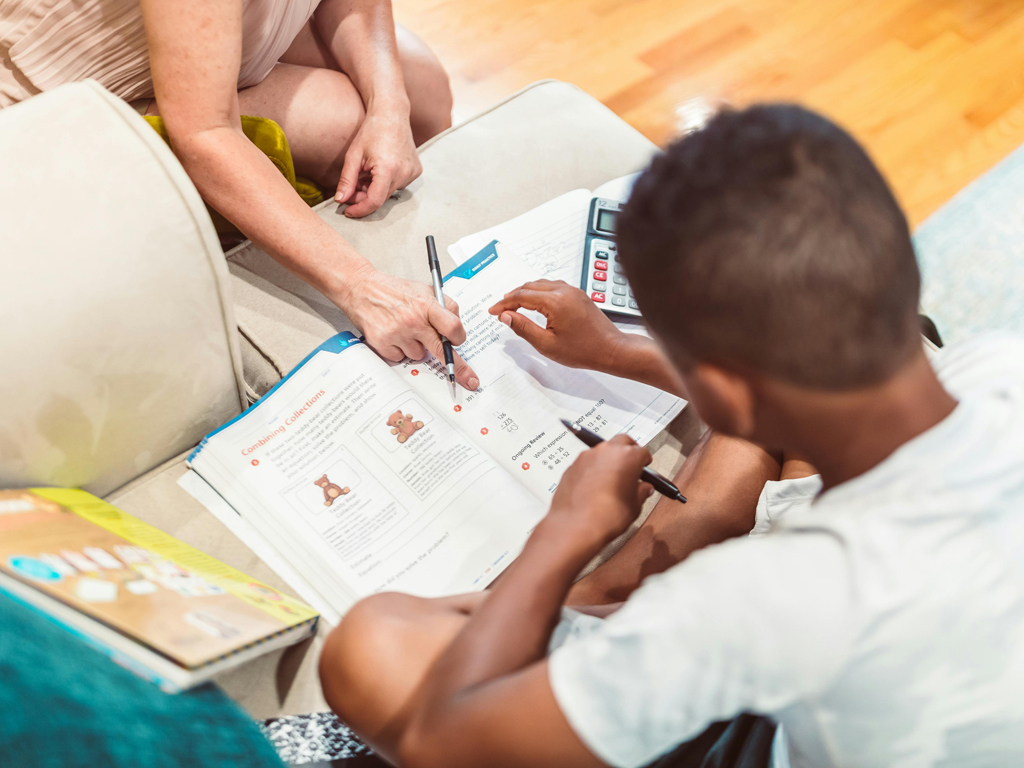
Every number has a purpose. Every calculation leads to a tangible outcome. When kids learn math through money, numbers stop being abstract symbols on a worksheet and start becoming tools they can actually use. Suddenly, addition and subtraction determine whether they can afford something they want. Percentages matter because they represent discounts or savings. Multiplication shows how small choices add up over time.
This shift is powerful because attention follows relevance. Many children struggle with traditional math instruction because it feels disconnected from their lives. Money changes that. When kids understand that math directly affects their choices, their independence, and their future, they engage differently. They care because the math matters to them.
Learning math through money also reflects how adults use math in the real world. Most of us aren’t solving equations for fun—we’re calculating grocery totals, comparing prices, planning trips, and managing monthly bills. Teaching kids math this way prepares them not just for tests, but for life.

Where to Start
One of the easiest places to start is the grocery store. A routine shopping trip can become a meaningful math lesson simply by involving children in the process. Comparing prices between brands teaches value and unit rates. Estimating the total cost of items in the cart strengthens mental math skills. Deciding whether it’s better to buy one larger item or multiple smaller ones introduces practical multiplication and division. These moments are simple, but they add up quickly.
Grocery shopping also introduces budgeting in a calm, low-pressure way. Instead of saying “we can’t afford that,” parents can explain, “That’s not in our budget today—what could we swap or save for later?” This reframes money as a system rather than an emotional issue. Children learn that money decisions are about planning and priorities, not scarcity or fear.
Holidays and gift-giving offer another natural opportunity to teach math through money. Planning for birthdays or Christmas often involves setting a total spending amount, dividing it among
multiple people, and tracking purchases along the way. Kids practice addition, subtraction, and estimation while also learning boundaries, generosity, and delayed gratification. They see that thoughtful planning leads to less stress and more meaningful choices.
Family vacations provide an equally rich learning experience. Whether planning a staycation or a longer trip, involving kids in the budgeting process makes math tangible. Calculating travel costs, lodging, meals, and activities shows how expenses accumulate. Children learn that choosing one experience often means saying no to another. These trade-offs build not only math skills, but also decision-making and emotional resilience.
Turn Monthly Bills Into Mini Lessons
Even monthly household bills can become teaching moments when shared in age-appropriate ways. Talking openly about utilities, subscriptions, or rent helps children understand that money flows in and out on a regular cycle. They begin to see how planning, saving, and consistency keep a household running smoothly. When these conversations happen calmly and routinely, money becomes familiar instead of intimidating.
This familiarity is one of the greatest benefits of teaching math through money. When money is treated as a normal part of life rather than a taboo topic, children grow up feeling capable and informed. They learn early that financial responsibility isn’t about being perfect—it’s about awareness, habits, and systems.
Make Money Conversations Routine
One practice I strongly advocate is setting aside just ten minutes once a week for proactive money conversations with kids. These short, structured discussions are effective because they remove emotion from the equation. Too often, families only talk about money when there’s pressure—when budgets are tight, or something unexpected comes up. In those moments, kids absorb stress rather than understanding.
A weekly check-in changes that dynamic. The conversation happens regardless of whether money is plentiful or limited. It feels more like school and less like crisis management. Children know what to expect, and parents don’t feel the need to cover everything at once. Over time, these brief conversations compound into a deep understanding.
This proactive approach has transformed my own family. By discussing money consistently and calmly, outside of moments of urgency, the experience becomes more holistic and manageable for everyone involved. Parents feel more confident. Children feel more empowered. The relationship around money becomes collaborative instead of reactive.
Everyday Life Is the Lesson
Teaching kids math through money doesn’t require special tools, advanced financial knowledge, or extra time in an already busy schedule. Every day life already provides countless opportunities to practice math in ways that are practical and meaningful. When parents lean into those moments, they aren’t just teaching numbers—they’re teaching life skills that last.
When money becomes part of a system, children understand, and math clicks into place. Numbers gain meaning. Confidence grows. And children begin to see themselves as capable participants in the world around them.
Elena Czarnowski is an educator, former tech professional, and founder of Kid Laboratories, an education company dedicated to helping children develop real-world skills in math, money, character, and future-ready learning. With a background in economics and math education, Elena is passionate about making learning practical, empowering, and accessible for families. She is the author of Future-Proof Kids: 10 Minutes a Week, which helps parents build essential life skills through simple, structured conversations at home.