by Hailey Zalopany
Photos Courtesy of Shelby Carlos
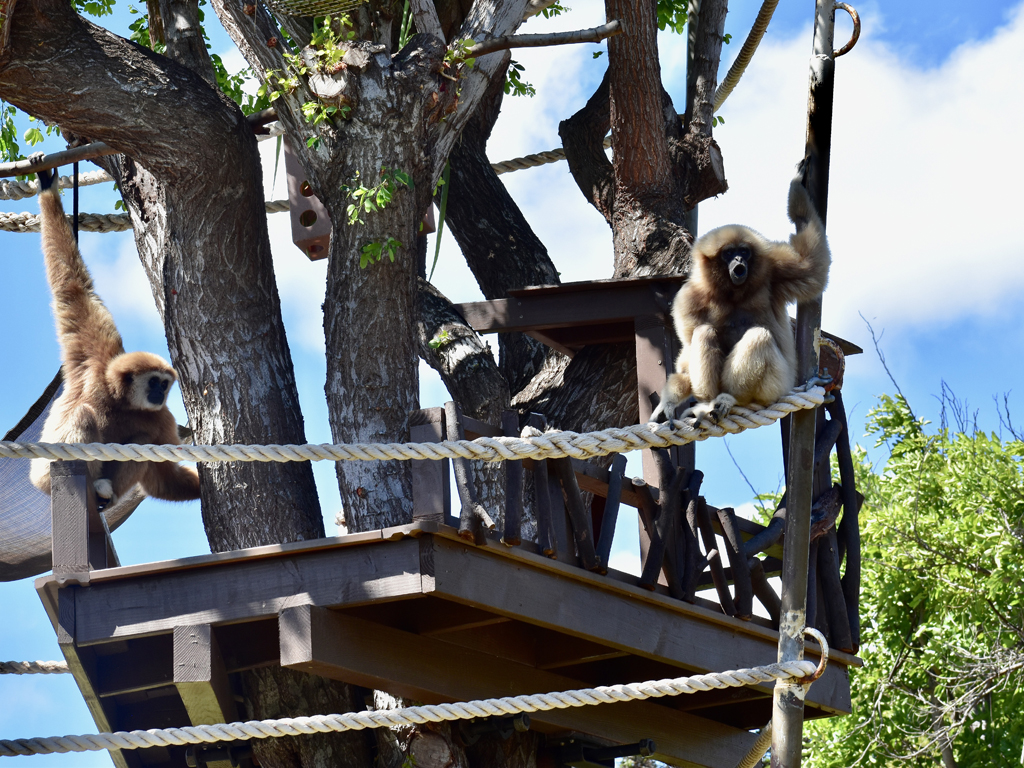
Gibbons are known for their haunting duets, sung high in the forest canopy to declare territory and to strengthen pair bonds. At the Honolulu Zoo, a pair of white-handed gibbons will soon begin to sing their own harmony. These apes are monogamous and are social creatures. Sadly, for the past six years, the Honolulu Zoo’s female gibbon has been without a mate. In April of this year, the Zoo acquired a new companion for this loving female. Their growing connection has captured the attention of both keepers and visitors, offering a window into the fascinating social world of these endangered primates.
About the Species
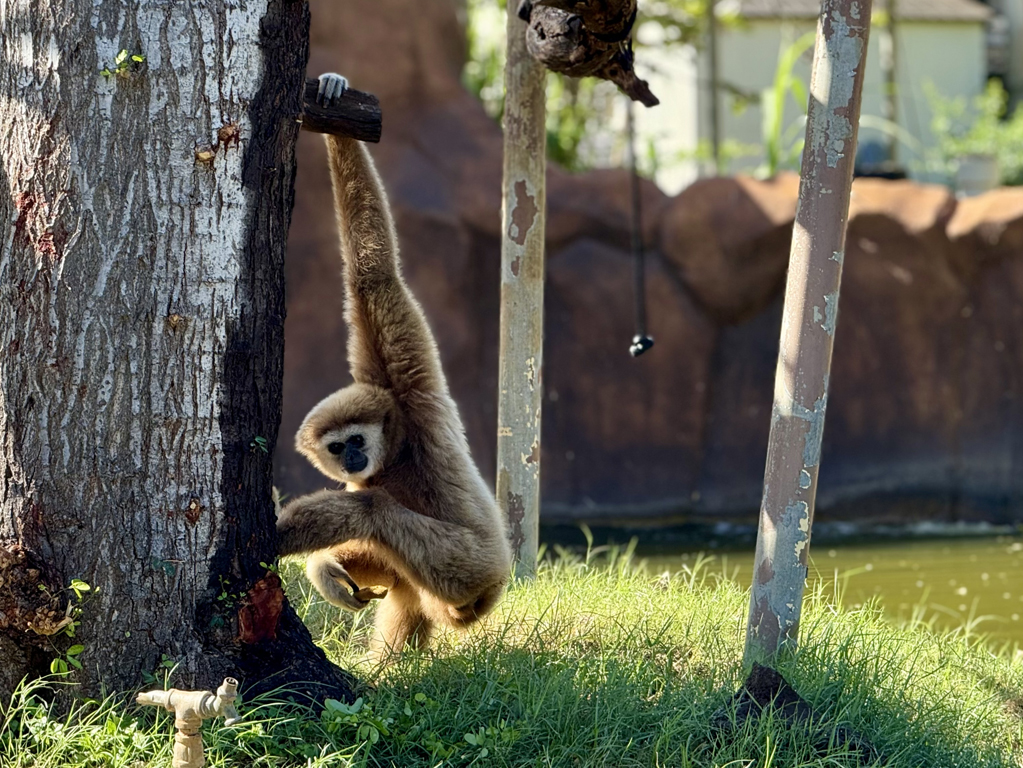
White-handed gibbons (Hylobates lar) are some of the most graceful tree-dwellers in the animal world. Native to the forests of Southeast Asia, they spend their days high above the ground, swinging from branch to branch with their extra-long arms in a style called “brachiation.” These gibbons love to eat fruit most of all, but they also munch on leaves, flowers, and even the occasional insect. One of their most special traits is their voices. Gibbons sing long, beautiful songs that echo through the forest. These calls help families stay close and also let other gibbons know which trees are already taken.
Sadly, the Southeast Asian forests are hearing less and less of these haunting tunes. The white-handed gibbons are an endangered species, facing serious threats from deforestation and the illegal pet trade. By protecting their habitats and learning about them, we can help ensure these amazing “singers of the forest” continue to thrive for generations to come.

Meet the Gibbons
The female gibbon, Japan, has been with the Honolulu Zoo since 1982. She was rescued from animal trafficking at 5 years old. Keepers describe her as sweet and observant. Not only is she always glad to see the staff, but also the other animals.
White-handed gibbons are monogamous and form strong bonds with their companions. Japan’s male companion, Sandy, unfortunately, passed away in 2019. For many years, the pair sang their own special song and raised two babies together, Emma and Mycah. Until recently, Japan was alone, but that changed when Bono was welcomed to the Honolulu Zoo family.
Bono is the new male gibbon acquired from the Santa Barbara Zoo on April 30th. Bono was born on October 18th, 1982, making him 42 years old! He is described as shy and gentle. Over his lifetime, he has shared his days with two other female companions, so meeting a new partner is not entirely new for him. Despite this, staff took all necessary precautions before introducing the two.
The Love Story
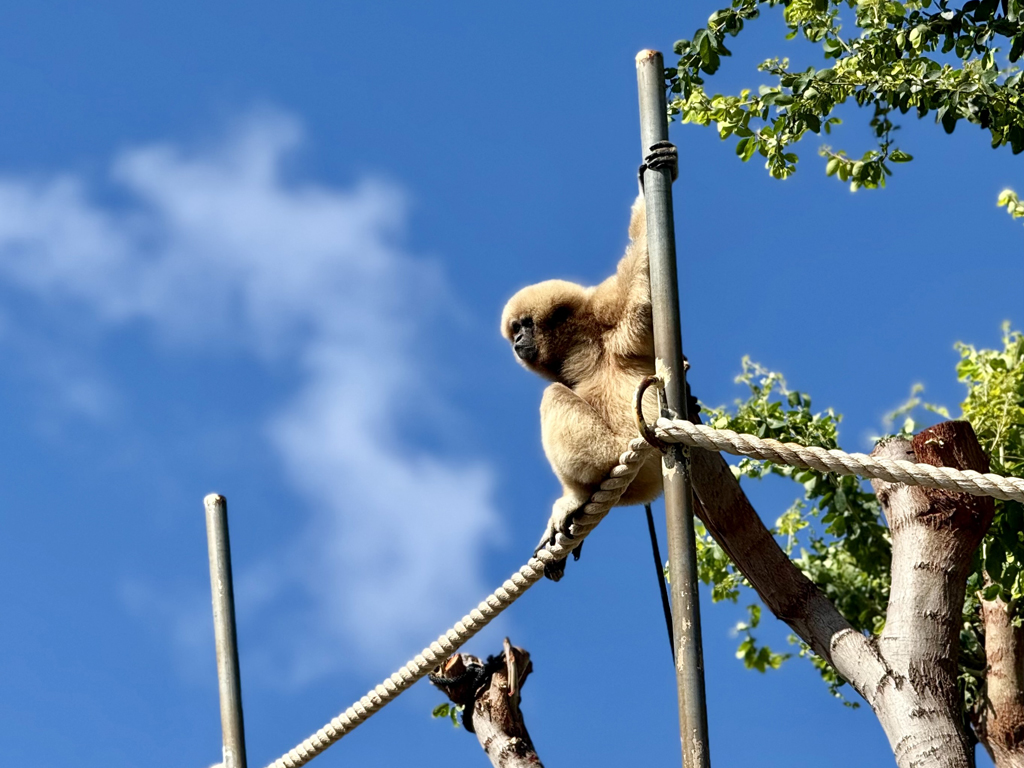
When Sandy passed away, Japan clearly missed her companion. Although she didn’t stop eating, her sadness was apparent to staff, especially those who have known her for many years. For weeks after Sandy passed away, Japan could be seen looking for him. She was kept busy with enrichment provided by the staff. It’s been six years, and while Japan has adjusted, gibbons are social animals that truly thrive with companionship.
Bono was acquired in April of this year, but has since had to go through a 120-day quarantine before he could be introduced to his mate-to-be. On July 22nd, the two were introduced through the mesh fencing of the vet clinic. Although they seemed excited to see one another, only a true physical interaction would prove if these two would be compatible.
On September 2nd, Bono and Japan met face to face. The staff prepared for both the worst and best outcomes of the interaction. Japan went up to him first, stopping about five feet away. Bono ran up, closing the gap between them and greeted her with a hug. It was clear to everyone that these two would get along just fine. They’ve been living together ever since, getting along well and retreating to their own “rooms” at night—much like an old married couple.
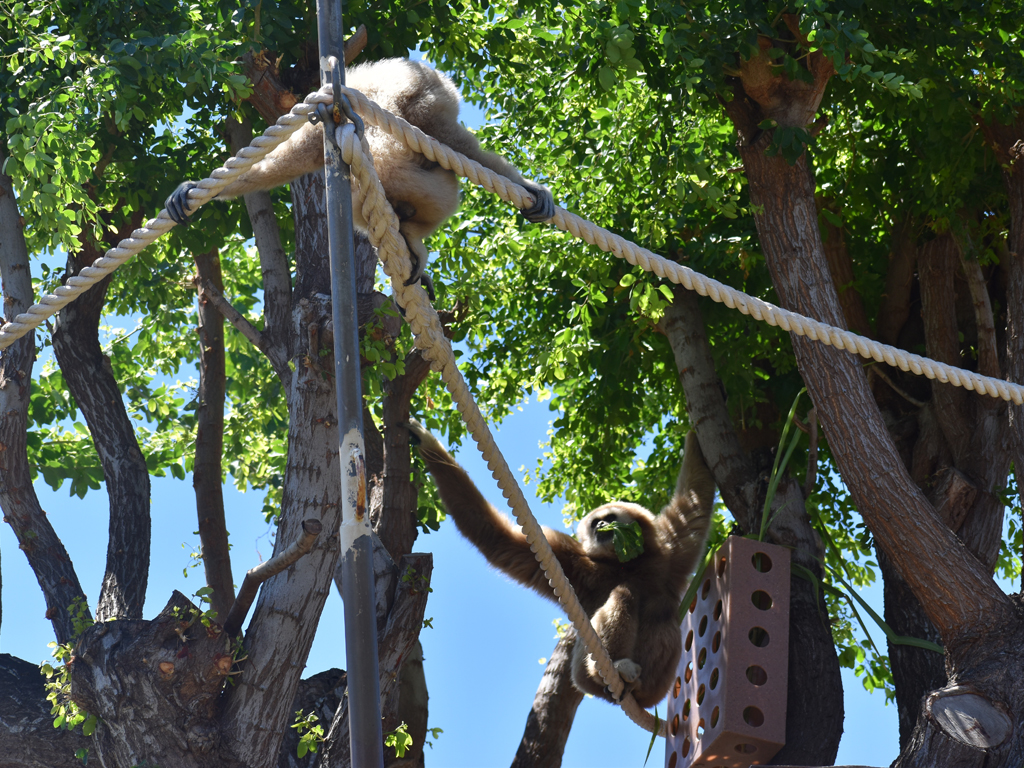
On September 19, the pair was released onto their very own island habitat. For Japan, it was a welcome return home; for Bono, it marked the beginning of his new life at the Honolulu Zoo. He has been settling in well, exploring the space, learning the ropes of the climbing structures, and engaging with the enrichment toys designed to keep him active and curious. Together, the two can now swing, (hopefully) sing, and share their days in a space built just for them.
Why This Matters
For gibbons, social connection is essential for their well-being. Unlike many primates that live in large groups, gibbons thrive in small family units, usually centered around a bonded pair and their young. These strong pair bonds reduce stress, encourage cooperation in raising offspring, and help maintain harmony within their territory. Their famous “songs,” often sung together in duets, aren’t just beautiful to hear but strengthen the bond between partners. Japan and Bono currently do not have a song together (it’s a work in progress). It’s uncertain whether the two will ever create a duet of their own, but what is certain is that their companionship is already enriching their lives. Even if they don’t “fall in love,” their friendship is unmistakable and will continue to bring comfort and connection to both.
Beyond individual well-being, pair bonds also matter for the survival of the species as a whole. Gibbons are endangered, with populations declining due to habitat loss and poaching. Maintaining strong family units ensures that offspring are raised in stable, nurturing environments, which directly supports population recovery. Zoos and conservation programs highlight these bonds to help visitors understand that saving gibbons is not just about numbers, it’s about protecting the relationships that allow them to thrive. By showcasing gibbons’ family lives, zoos raise awareness, inspire empathy, and educate the public about how deforestation and the illegal pet trade threaten these remarkable animals. Every connection made between visitors and the gibbons’ story helps build momentum for conservation efforts in the wild.
Public Connection
When you visit the Honolulu Zoo, you don’t have to look far to meet Bono and Japan. Their island habitat sits right at the front of the ‘Primates of the World’ section, making it easy to stop and watch them swing gracefully from branch to branch. Seeing their playful energy and hearing their calls in person helps visitors connect with these rare primates in a way that no book or video ever could. Every time you pause to admire their agility, you’re also joining a bigger story, one that reminds us why protecting gibbons and their forest homes truly matters.